Animal Body Parts in English for Kids
The 18 core words name features animals use to see, eat, move, stay warm, and defend themselves. Animal Body Parts in English for Kids: Words and Activities starts with familiar terms such as eyes, legs, and tail, then introduces beak, paws, and fins. Follow four steps: show an animal, point to the part, say a short sentence, and reuse the word in a game. Children need practical vocabulary they can recall in spoken English, not every zoological term.
📥 Animal Body Parts Practice Pack
Read, match, choose, and correct animal body words in context.
Leave your email — we'll send the PDF to your inbox.No spam — the PDF plus one short reminder. Unsubscribe anytime.
Core Words and Useful Phrases
Start with parts shared by different animals, then introduce features that distinguish animal groups. The table pairs general and animal-specific words with complete sentences.
Pair nouns in Animal Body Parts in English for Kids: Words and Activities with spoken patterns: “It has…”, “It uses its…”, “How many legs does it have?” and “What covers its body?” Sentence frames turn vocabulary into speech.
Using the Words in Context
Animal Body Parts in English for Kids: Words and Activities sticks when children compare animals. Ask, “What does a bird have?” A child might answer, “It has wings, feathers, and a beak.” Contrast a fish: “It has fins, scales, and a tail.”
Add action verbs after children know the nouns. Birds flap their wings, dogs wag their tails, cats clean their paws, and fish move their fins. Children can explain purpose: “The duck uses its feet to swim” or “The rabbit uses its ears to hear.” Accept a short answer, then model the full sentence.
Older learners can compare: “Both animals have tails, but only the bird has feathers.” They can ask, “Does a turtle have fur?” and correct the answer: “No, it does not. It has a shell.” This practises vocabulary and grammar without a formal test.
Activities for Different Ages
School-age kids. Use toy animals, picture books, or safe figures. Name a part and ask your child to point: “Show me the tail.” Swap roles so the child gives the instruction. Practise a small set through movement, sound, and pictures.
School-age kids. Sort animals by fur, feathers, scales, or shells, then explain each choice. For a drawing game, one person describes an imaginary animal while the other adds “three eyes,” “two wings,” or “a long tail.”
School-age kids. Progress from names to functions and comparisons. Learners can contrast a camel’s feet with a cat’s paws or explain why a water animal needs fins. Animal Body Parts in English for Kids: Words and Activities supports short fact files, quizzes, and spoken presentations.
Simple Practice at Home and in Lessons
Short, frequent practice beats repeated copying. Place animal pictures face down, choose one, and describe it without its name. Give two or three clues: “It has a beak, two wings, and feathers.” The other player guesses and repeats one clue as a full sentence.
Quick Practice: Build an Animal
Draw a body. Take turns adding a part and saying: “It has four legs.” “It has two horns.” “It has a long tail.” Finish by describing the whole animal without checking earlier sentences.
During one-to-one lessons, LearnLink tutors can match the task to a child’s age and speaking level. Pictures, questions, and sentence frames help learners use each word. Parents can follow the same sequence: point, name, describe, compare, and recall.
Common Mistakes and Clear Corrections
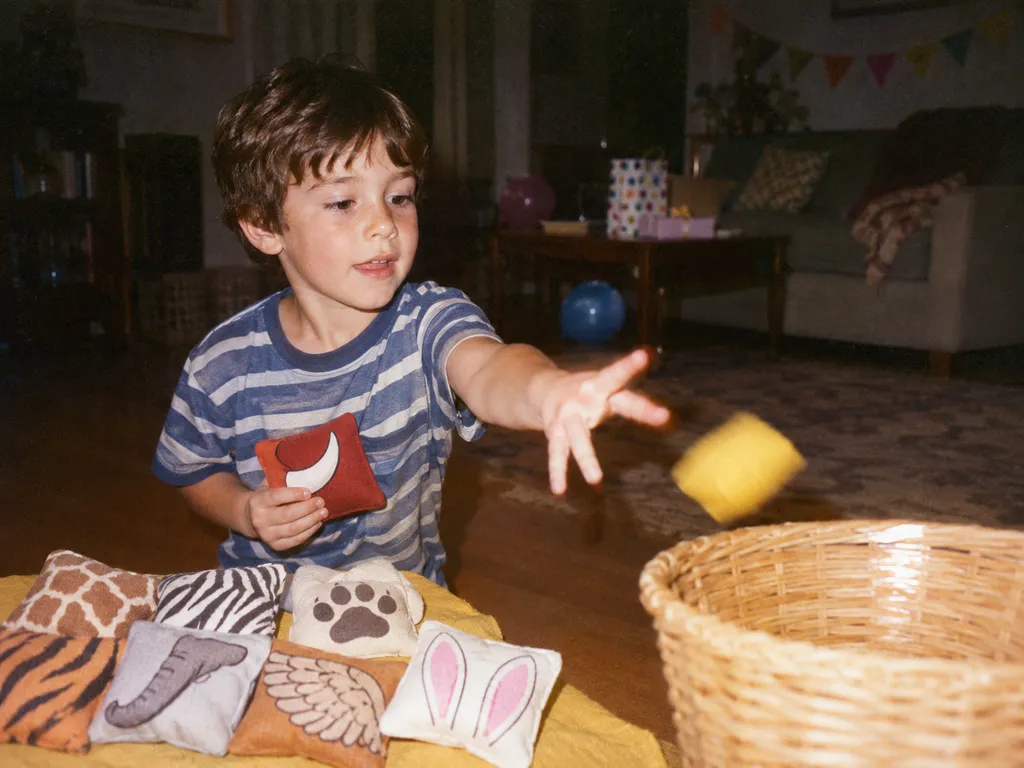
Children may call every animal’s limb a foot, but English often has a precise term: a cat has paws, a horse has hooves, and a bird has feet. Recast the sentence calmly: “Yes, the cat has small paws.” Continue the activity without a long explanation.
Irregular plurals require practice. One foot becomes two feet, and one tooth becomes two teeth. By contrast, wing, claw, and horn take -s. Pair each form: “One wing, two wings.”
Children may confuse fur, feathers, and scales. Sorting pictures teaches the distinction faster than definitions alone. Multilingual children may connect a new term with another language. A brief translation can establish meaning; then return to the English picture, action, and sentence.
- Point to three animal pictures and name one body part on each.
- Compare two animals, then correct one mixed-up body-part sentence aloud.
- Match five labels to an animal picture, checking singular and plural forms.
- Ask your child to replace “hand” with “paw” in one example.
- Finish with a picture-book page and praise each clear self-correction.
When a word has several meanings or pronunciations, Cambridge Dictionary is a useful check before turning it into child-friendly examples.
Frequently Asked Questions
How Many Animal Body Part Words Should My Child Learn at Once?
Start with a small set your child can use in sentences instead of a long list. Five or six familiar words may suit a young beginner. Add terms after your child can point, name, and use a frame such as “It has…” Animal Body Parts in English for Kids: Words and Activities should progress in stages, with old words returning in each game.
Should I Correct Every Vocabulary Mistake?
No. Correct errors that change meaning or recur, but maintain the activity’s flow. If your child says, “The bird has fur,” model: “The bird has feathers.” Ask for one full-sentence repetition, then continue. Focused feedback protects speaking confidence.
Can My Child Learn These Words Without Reading?
Yes. Younger children learn through pictures, toys, pointing, drawing, movement, and speech. Show an animal, point to a part, and use the word in a short sentence. Labels can follow later. Understanding and saying “The rabbit has long ears” already builds vocabulary.
How Can We Help the Words Stay in Memory?
Reuse words in different tasks across several days. Your child might point to a tail, draw one the next day, and compare two tails later. Alternate recognition and recall: sometimes provide the word; sometimes ask for it. Short sentences strengthen retrieval better than repeated copying.
Choose six words and practise for five minutes. Ask your child to point, name, and use each in one sentence. Repeat the set on three different days, then add two words after the first six can be recalled without help.
Start your child's English journey today — book a trial lesson with LearnLink.
Stay updated on our latest tips and resources by following us on Instagram LearnLink.