English Bakery Vocabulary for Kids
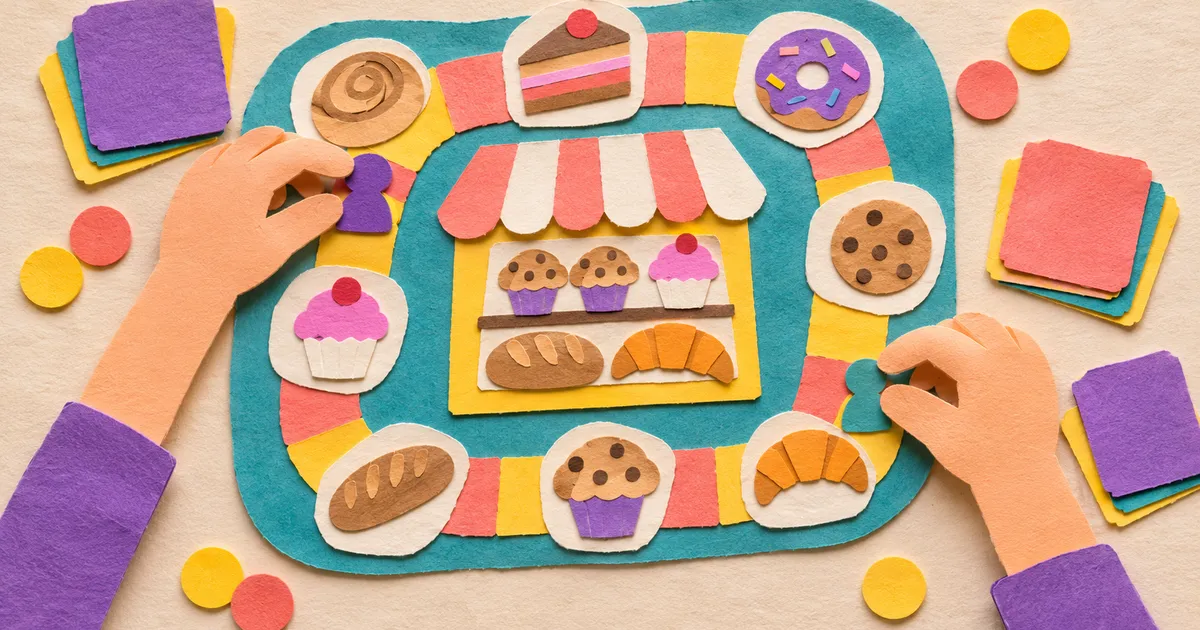
English Bakery Vocabulary for Kids: Words and Activities combines names, action words, phrases, and games for practice. Children start with bread, cake, flour, and oven, then learn language for buying, baking, and describing food. The goal is recognition, short sentences, and everyday understanding—not memorising every bakery word at once. Practise with toy food, drawings, menus, shop role-play, or supervised baking.
📥 Bakery Vocabulary Practice Pack
Words, phrases, and real-life bakery practice for young English learners
Leave your email — we'll send the PDF to your inbox.No spam — the PDF plus one short reminder. Unsubscribe anytime.
Essential Words for a Bakery Visit
Start with words your child can see or act out. Grouping vocabulary by purpose improves recall compared with one long list. Learn the food first, followed by people, ingredients, tools, and actions.
- Place and people: bakery, baker, customer, counter, shelf, display, menu
- Bread and savoury items: bread, loaf, slice, roll, bun, baguette, flatbread
- Sweet items: cake, cupcake, muffin, cookie, biscuit, pastry, pie, tart
- Ingredients: flour, sugar, butter, egg, milk, yeast, chocolate, fruit
- Tools: bowl, spoon, whisk, tray, oven, rolling pin, cake tin
- Actions: mix, pour, stir, whisk, knead, roll, cut, bake, cool, slice, decorate
- Describing words: fresh, warm, soft, crisp, sweet, round, golden, delicious
When using English Bakery Vocabulary for Kids: Words and Activities at home, choose eight to twelve words connected to your child’s knowledge. A five-year-old might begin with bread, cake, baker, bowl, mix, and bake. An older learner can add dough, yeast, knead, pastry, and customer.
Useful Phrases and Examples in Context
Words become practical when children place them in short patterns. Begin with predictable sentences: “This is a loaf,” “The baker mixes the dough,” and “The cupcakes are on the tray.” Change one word at a time while keeping the sentence frame.
- May I have a bread roll, please?
- How much is this cake?
- I would like two muffins.
- The baker is kneading the dough.
- We need flour, butter, and eggs.
- Please put the tray in the oven.
- The bread smells fresh.
- Let the cookies cool before you eat them.
Practise a two-line exchange. The customer asks, “What would you like?” and the baker answers, “I would like a slice of apple pie, please.” Switch roles after three orders. English Bakery Vocabulary for Kids: Words and Activities then supports choosing food, polite requests, and responses.
Add number words through “one loaf,” “two rolls,” “three cupcakes,” and “four biscuits.” Use pretend prices for language practice without turning the activity into a maths test.
Bakery Activities for Different Ages
For school-age kids, use pictures, toy food, or safe kitchen objects. Say one word and ask your child to point to the matching item, then swap roles. Children can pretend to stir, roll, cut, and decorate while naming each action.
For school-age kids, create a small bakery counter with picture labels and a short menu. Take turns as baker and customer. English Bakery Vocabulary for Kids: Words and Activities suits role-play because each word prompts an action or request.
For school-age kids, add planning and description. Ask your child to design a bakery menu, write ingredient lists, or compare products: “The bread is savoury, but the muffin is sweet.” Older learners can explain a recipe using first, next, then, and finally.
Three-minute Bakery Challenge
Place six bakery pictures on a table. Your child names each picture, chooses two ingredients for it, and states one action used to make it. Finish with: “I would like a warm roll, please.”
A Simple Practice Routine
Keep English Bakery Vocabulary for Kids: Words and Activities manageable through three short steps: notice, use, and recall. First, show six to ten words. Next, use them in a game or conversation. Finally, hide the pictures and ask your child to recall every word possible.
Revisit the same set another day before adding vocabulary. Keep the words but vary the task: point to pictures, sort foods and tools, complete a sentence, or place a pretend order. Repetition reveals whether your child can retrieve each word instead of merely recognising it.
Across LearnLink lessons, our tutors place new words in questions, descriptions, and short conversations. Parents can follow the pattern at home without recreating a lesson. Five focused minutes during a meal, shopping trip, or baking session provides focused practice.
Common Words That Children May Confuse
Bakery terms can look alike while serving different roles. Teach each contrast through examples instead of long definitions. The table pairs each distinction with a model sentence.
Regional differences are normal, especially in multilingual families. Teach the term used at home or school first, then explain that another speaker may choose a different name. Your child need not accept one English variety and reject every other term. Context matters more than correcting a harmless regional choice.
- Compare bread and bred aloud, then ask your child to explain each meaning.
- Sort flour, flower, dough, and doe cards into matching picture pairs.
- Read a bakery sentence, and let your child circle the correct word.
- Write two short clues for roll, bun, whisk, and mix.
- Practice English bakery vocabulary through role-play, correcting confused words together.
When a word has several meanings or pronunciations, Cambridge Dictionary is a useful check before turning it into child-friendly examples.
Frequently Asked Questions
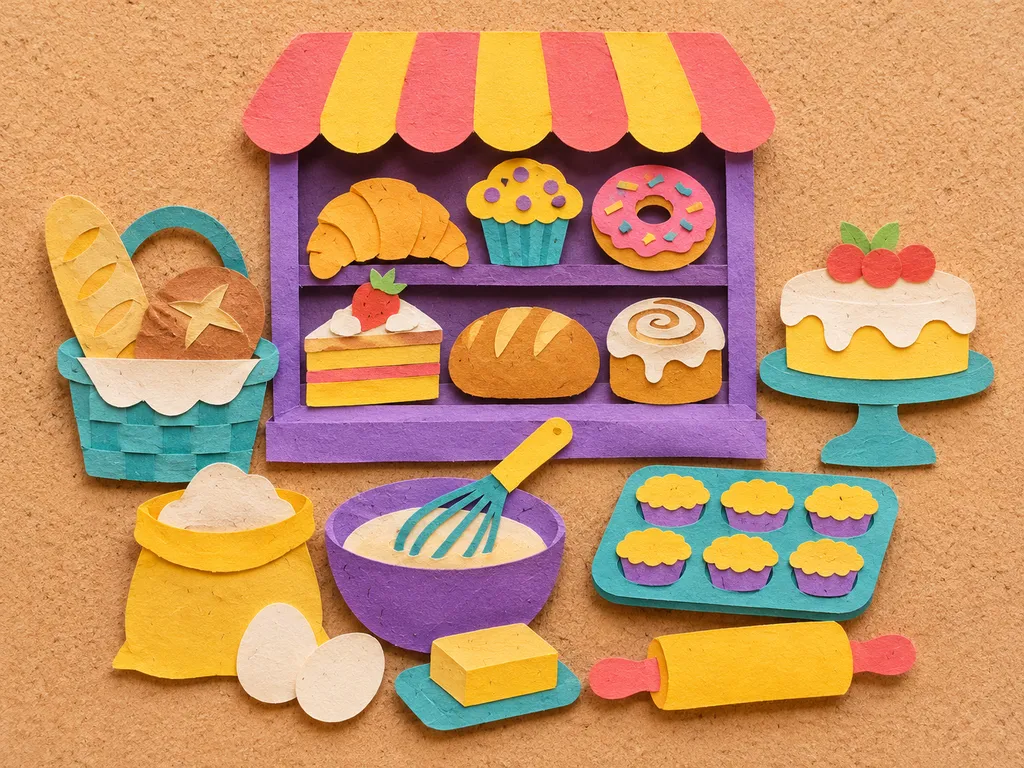
How Many Bakery Words Should a Child Learn at Once?
Begin with six to ten words for a young learner and a slightly larger set for an older child. Treat English Bakery Vocabulary for Kids: Words and Activities as a menu, not a test. Choose words from your child’s meals or local shops, then expand the set after the first group appears in short sentences. A small active vocabulary beats a long passive list.
What If Our Family Does Not Eat Some of These Bakery Foods?
Choose foods suited to your family and local culture. Bread might mean a baguette, flatbread, roll, or another familiar type. Pictures can introduce unfamiliar items, but familiar foods should begin the practice. This keeps language concrete without treating one country’s bakery as the standard. Add local baked foods and describe them in direct English.
Should Children Learn Both British and American Bakery Terms?
Teach the form your child meets most often, then introduce regional alternatives when relevant. Biscuit and cookie do not always identify the same food across English-speaking regions. Pictures and context show the distinction without requiring a full list of regional differences. The goal is recognising that two speakers may label a similar item differently.
How Can My Child Practise Without Doing Real Baking?
Use drawings, food packaging, reusable picture cards, modelling dough, or a pretend shop. Your child can sort ingredients and tools, create a menu, take an order, or describe an imaginary recipe. A bakery window or supermarket bread section can prompt: “What can you see?” and “Which item would you choose?” Real baking is engaging but optional.
If your child needs steady speaking practice, start small — choose a trial lesson.
Stay updated on our latest tips and resources by following us on Instagram LearnLink.